
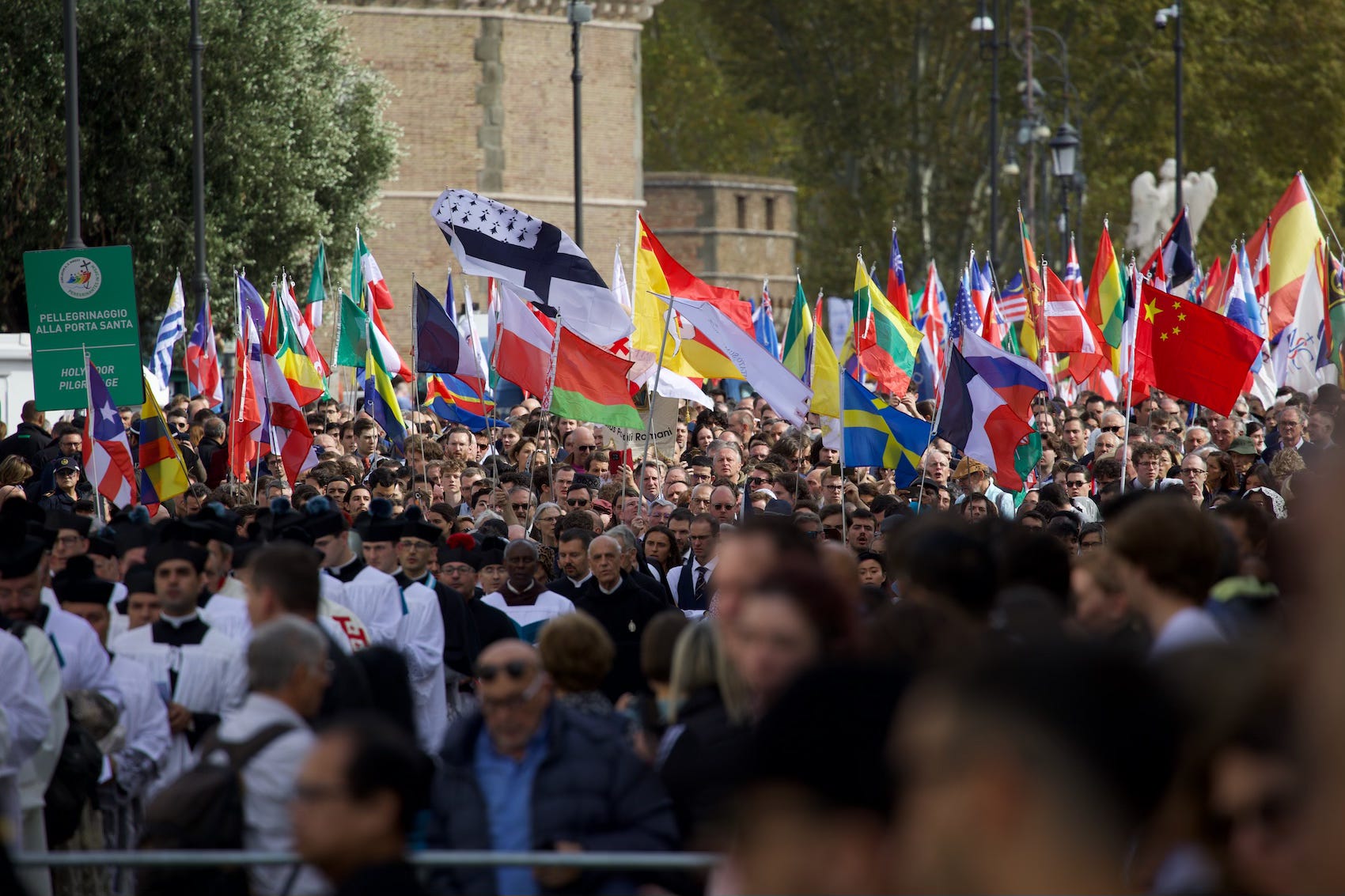
Is Pope Leo XIV missing an opportunity to heal wounds felt by traditional Catholics by not meeting with a large representative group of them next month?
The Holy Father has so far not responded to a request for a papal audience from the leaders of an annual traditional Catholic pilgrimage to Rome — despite the request having been made nine months ago and the Pope saying last year he would like to meet such groups.
The organisers of the Oct. 23-25 Ad Petri Sedem (to the See of Peter) pilgrimage, mostly made up of laypeople, had requested the papal audience in a letter signed by two lay members of the organisation and personally delivered by Bishop Athanasius Schneider when he met Pope Leo at the Vatican last December.
They also asked in the same letter for permission to celebrate a Pontifical Mass at the Altar of the Chair in St Peter’s Basilica, as has happened several years in the past, and during last year’s pilgrimage which took place during the jubilee year and was celebrated by Cardinal Raymond Burke.
The pilgrimage is run by Coetus Internationalis, an association comprising 33 traditional Catholic associations from all over the world. Last year, an estimated 3,000 faithful attended the annual three-day gathering.
After repeated requests for a definitive response, the Secretariat of State on 7 August declined permission for the Pontifical Mass to be celebrated in St Peter’s Basilica. The Mass will instead be held at the Basilica of St Mary Major on 24 October, with Bishop Athanasius Schneider as celebrant.
The organisers expressed their “deep gratitude” to Cardinal Rolandas Makrickas, archpriest of St Mary Major, for granting permission for the Mass.
No official reason was given for the Vatican’s decision. Pilgrims will nevertheless process together into St Peter’s Basilica that day to venerate the relics of the Apostle Peter and join in a time of prayer.
But now comes the absence of a response to the papal audience request, despite there being no publicly announced papal engagements during the pilgrimage, except for the Pope’s Angelus address on Oct. 25.
The silence is especially surprising to traditional Catholics given the Holy Father’s declared willingness to know more about them.
In an interview with Vatican journalist Elise Ann Allen published a year ago, Pope Leo said he had not yet had the opportunity “to really sit down with a group of people who are advocating for the Tridentine rite.” He added: “There’s an opportunity coming up soon, and I’m sure there will be occasions for that.” He then suggested that the matter might need to be addressed through a synodal process: “That is an issue that I think also, maybe with synodality, we have to sit down and talk about.”
Observers see the absence of a papal audience as also contradicting his overt support for synodality, the Pope’s stated wish to listen to all the faithful, and note his openness to many other groups which he regularly receives in private audience.
Over the past month, the Holy Father has received representatives from a wide variety of organisations including participants at the “Fratelli tutti: North–South socio-environmental dialogue” meeting (Sept. 12); Perpetual Adorers of the Blessed Sacrament of the Federation of the Holy Spirit (Sept. 5); a delegation from Oriel College, University of Oxford (Sept. 4); a US delegation of the Society of St Vincent de Paul (Aug. 28); and bishops of the Lutheran Church of Norway (Aug. 26).
In February, Leo XIV received members of Pro Petri Sede, a lay association, explicitly “on the occasion of your pilgrimage to Rome.” He noted that its members make the pilgrimage regularly to meet the Successor of Peter every three years. He has also regularly met pilgrim groups at the end of his weekly general audiences — a possibility also not offered to the organisers of the Ad Petri Sedem pilgrimage.
Some within traditional circles are observing a pattern emerging of excluding traditional Catholics from access to the Holy Father. They are also concerned about continuing and, in some dioceses, increasing restrictions on the vetus ordo — Toronto being the latest example.
With no opportunity to meet the Pope, they are wondering how he can become better acquainted with traditional lay faithful and their very real concerns when the chance for him to meet a highly representative group of them is passed over. Is the Pope, they wonder, perhaps listening only to cardinals, bishops and others who are unsympathetic to the traditional Roman rite and so he rarely hears a balanced view? Are the Pope and the Holy See, in fact, only heeding the views of clergy, contrary to the aims of the post-conciliar era which was supposed to give laity greater say?
Furthermore, they are asking if the Pope is perhaps unaware of the results of a Vatican survey of bishops on which Traditionis Custodes — Pope Francis’ 2021 decree restricting the traditional Roman rite — was said to have been based. The survey found that most bishops were actually in favour of continuing with Summorum Pontificum, Benedict XVI’s decree liberalising the vetus ordo.
For traditional Catholics who have asked only for the Successor of Peter to meet and hear them, the Pope’s silence risks deepening wounds that an audience might have begun to heal.
Coupled with continuing restrictions, it makes it hard for them to detect any actual pastoral concern, and suggests instead that a door is being quietly closed.
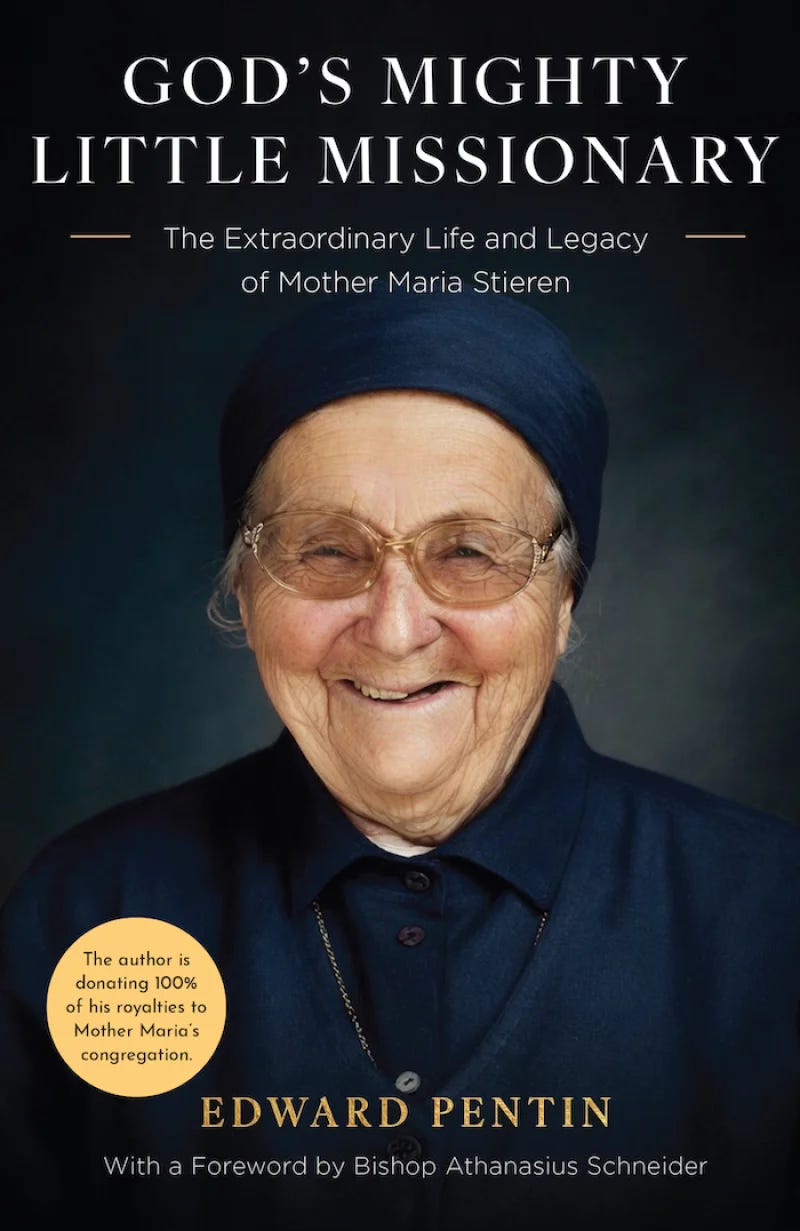
God’s Mighty Little Missionary: The Extraordinary Life and Legacy of Mother Maria Stieren
is available to pre-order from Sophia Institute Press
“I am profoundly grateful to Edward Pentin for making Mother Stieren more widely known through this biography. May she inspire us to fidelity and perseverance, to greater reverence for the Blessed Eucharist and to greater missionary zeal in preaching the saving Gospel of Our Lord Jesus Christ!”
His Eminence Robert Cardinal Sarah
Prefect Emeritus, Congregation for Divine Worship and Discipline of the Sacraments.
All author royalties go to Mother Maria’s Congregation
No answers from the Vatican to requests, just silence. This reminds me of Aldous Huxley’s Introduction to Brave New World where the “state” never answers questions it cannot answer. They are simply ignored; never acknowledged.
Is this in fact how the “Synodal way” works?
Shameful behaviour.
Perhaps Leo misunderstands that the Novus Ordo was built upon the Vetus Ordo, which forms it's heart and core, so that without the experience of Traditional Catholicism, the Novus Ordo is hollowed out.
The Church would grow again if its Traditional heart and core was carried forward rather than supressed and supplanted by a stripped-back, derivative replacement that is incomplete and considerably weaker without it.